Need emergency plumbing in Richmond?
Send a request through the form or email contact@apparentlyautomatic.garden. Describe what is happening and add any photos. Your request goes to a provider in our network.
No obligationRequest an estimate to get started
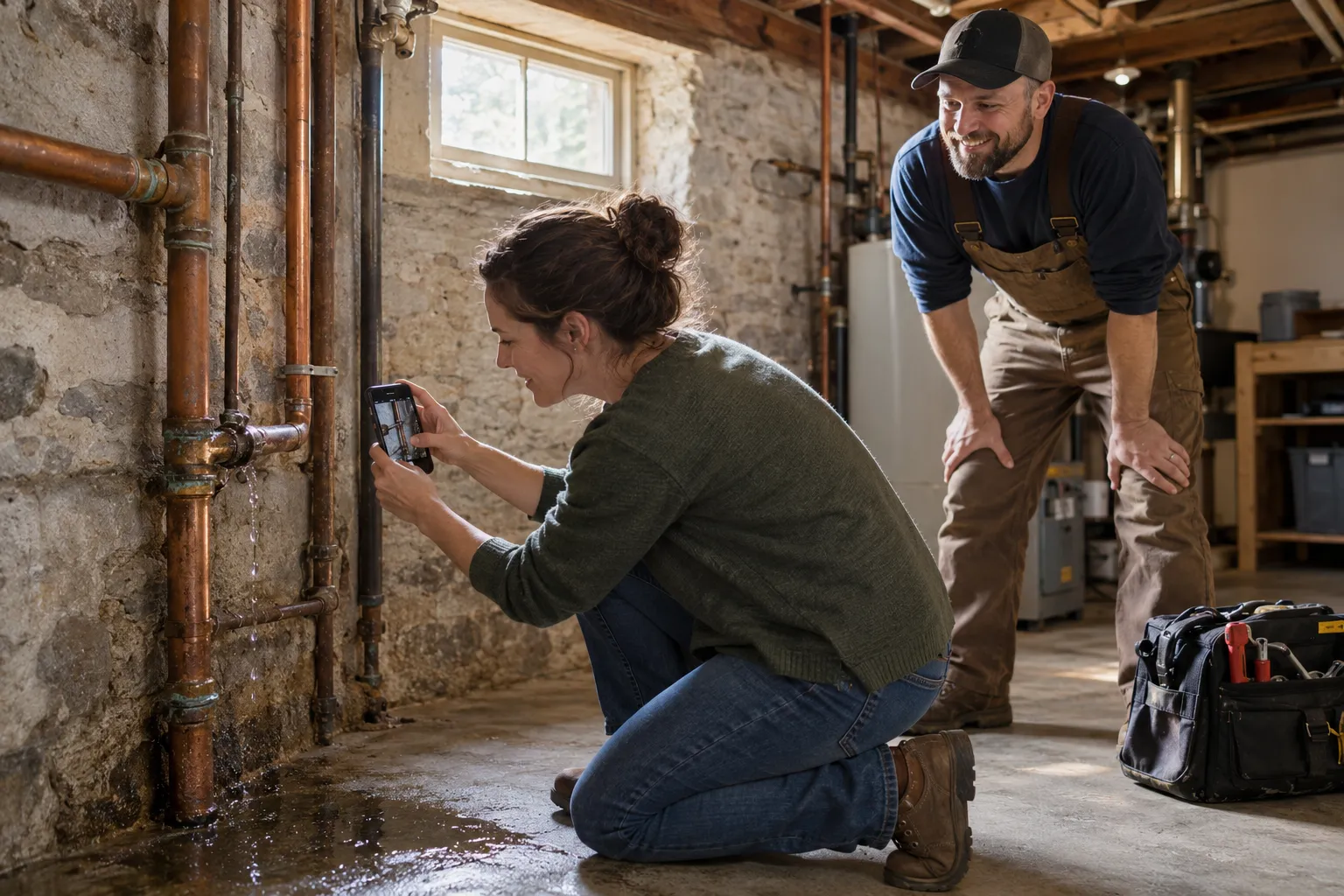
A lot of people think a plumbing emergency is only about the repair. In practice, the first few minutes matter just as much. Shutting off water, taking photos and writing quick notes can make the whole job smoother for you and for the provider who arrives.
Apparentlyautomatic Plumbing is a referral service. We do not do the plumbing work. We connect homeowners in Richmond and the Richmond area with independent local providers who handle burst pipes, leaks, backups and water heater failures. Each provider sets its own prices and availability. You can request an estimate, compare answers and decide with a clear head. Document first, then ask.
Take a breath. Most plumbing emergencies feel bigger in the first minute than they are once the water is stopped. Do these three things before anything else.
Then request an estimate and keep reading while you wait.
A lot of people think only a spraying pipe counts. In practice, a slow leak behind a wall can soak insulation and drywall for days before a stain shows up. If you see a spreading wet spot, a ceiling bulge or a water meter that keeps moving with everything off, treat it as urgent.
Some problems clearly cannot wait. Others can usually be held until a provider is available.
A dripping faucet or a slow sink is annoying, but it is rarely an emergency. Blocked pipe services are a different matter when wastewater is backing up into living space.
Water spreads. It moves along joists, into basement corners and down behind finished walls. Humid summers help mold grow, and cold months can turn a small leak into a bigger break. Acting early keeps the repair smaller and the cleanup shorter.
Here is the paperwork-ready part. A few minutes of record keeping saves headaches later, with providers and with any insurance conversation.
Some policies may cover sudden damage, so check your policy. Providers can often help document damage for a claim, but they cannot promise what an insurer will decide.
Request a callback to check provider availability in your area. Hours vary by provider.
Myth: a frozen pipe is fine until it bursts. In practice, the thaw is often when the trouble shows, because water pours out of a crack you could not see. Older colonial and split-level homes can have pipes in cold basement walls or crawl spaces. Freeze-thaw winters and nor'easters make this more common.
If a pipe is frozen, keep the faucet slightly open and warm the room gently. Do not use an open flame. If you see a crack or bulge, shut off the water and wait for a provider.
A puddle under the tank, rusty hot water or a hissing sound are all worth a quick look. If water is leaking from the tank itself, shut off the cold water supply to the heater and turn off its power or gas. Tank leaks usually mean replacement, while valves and connections can often be repaired. Take a photo of the label with the age and model.
If wastewater is rising in tubs, floor drains or toilets, stay out of the area and keep kids and pets away. Do not run more water. Emergency drain clearing may be part of the fix, and a provider can tell you if the problem is a simple clog or something deeper. Write down which fixtures are affected.
A provider in our network will usually find the source, stop the leak, and explain the repair options. Some jobs are fixed on the spot. Others need parts or a second visit. Older homes with aging cast-iron or galvanized pipes can surprise everyone, so expect the plan to change once walls are opened.
Hire with confidence by asking a few plain questions. Here is what a good answer sounds like.
Red flags include pressure to sign right away, a price that only comes after the work is done, and no willingness to explain the problem.
Do not skip the wrap-up. Ask for an itemized invoice and note what was repaired or replaced. Take a final set of photos once things are dry. Ask whether drywall, flooring or insulation needs drying out, and keep the paperwork in one folder. Learn where your main shutoff is and test it twice a year so the next surprise is smaller.
Learn which problems are true emergencies and which can wait, so you know when to shut off water and request an estimate.
We refer you to independent local providers who handle leaks, bursts and heater failures.
Photos, notes and receipts, organized before you ask for quotes.
Know what to ask a provider and spot answers that raise red flags.
Prices vary by home, pipe condition, parts and time of day. These are typical U.S. ranges only. Providers set their own rates, so ask for a written quote before work begins and ask what could change it.
| Item | Typical range | Notes |
|---|---|---|
| Emergency service call | $150 – $500 | Often covers diagnosis and travel |
| Burst pipe repair | $250 – $1,500 | Depends on access and wall repair |
| Frozen pipe thawing | $200 – $800 | Higher if the pipe has cracked |
| Water heater repair | $150 – $600 | Valves and parts are common fixes |
| Water heater replacement | $1,000 – $3,500 | Tank size and fuel type matter |
| Main shutoff valve replacement | $150 – $600 | Older valves may need extra work |
Shut off the main valve or fixture valve and turn off power near wet areas if safe.
Take photos, jot down times and keep receipts for anything you buy or move.
Tell us what happened and we refer you to a local provider.
Compare the written quote, ask your questions and choose what feels right.
Clear photos and notes help providers understand the problem quickly and give you a more accurate estimate.
Simple questions help you compare providers and spot vague answers before you agree to anything.
A short checklist gives you something steady to do while you wait for help.
You review the estimate and decide. Nothing is required.
Send a request through the form or email contact@apparentlyautomatic.garden. Describe what is happening and add any photos. Your request goes to a provider in our network.
No obligationShut off the water at the main valve or the fixture valve. If water is near outlets or appliances, turn off power only if you can reach the panel safely. Then take photos and request an estimate from a local provider.
Some policies may cover sudden damage, but coverage varies. Check your policy and talk with your insurer. Photos, notes and receipts can help, and providers can often help document damage for a claim.
Ask about licensing, get the quote in writing and ask what could change the price. Be cautious of pressure to sign on the spot, no clear explanation, or a price that only appears after the work.
Send a request through the form or email contact@apparentlyautomatic.garden. Describe what is happening and add any photos. Your request goes to a provider in our network.
No obligation